


There is a specific kind of busy that comes with running your own creative practice. It involves a lot of browser tabs and a persistent background hum of things that haven’t been dealt with yet. Optimise. Scale. Improve. Refine. The words are everywhere, thrown at you from every direction. And they matter. They genuinely do.
But somewhere alongside all of that, and trying to run an efficient business, I’ve seen something else that tends to get squeezed out. The curiosity about what we’ve actually built.
In the relentless pursuit of doing better and doing more in less time, we’ve stripped some of our processes of their joy. Of their wonder. Noticing got replaced exclusively by measuring. Deep attention got replaced by automated tracking. Sitting with something got replaced by ticking things off. And the kind of slow, open-eyed looking that reveals something else got dropped from the schedule because it doesn't necessarily produce anything you can put in a weekly update.
I’d like to make a case for making room for it.
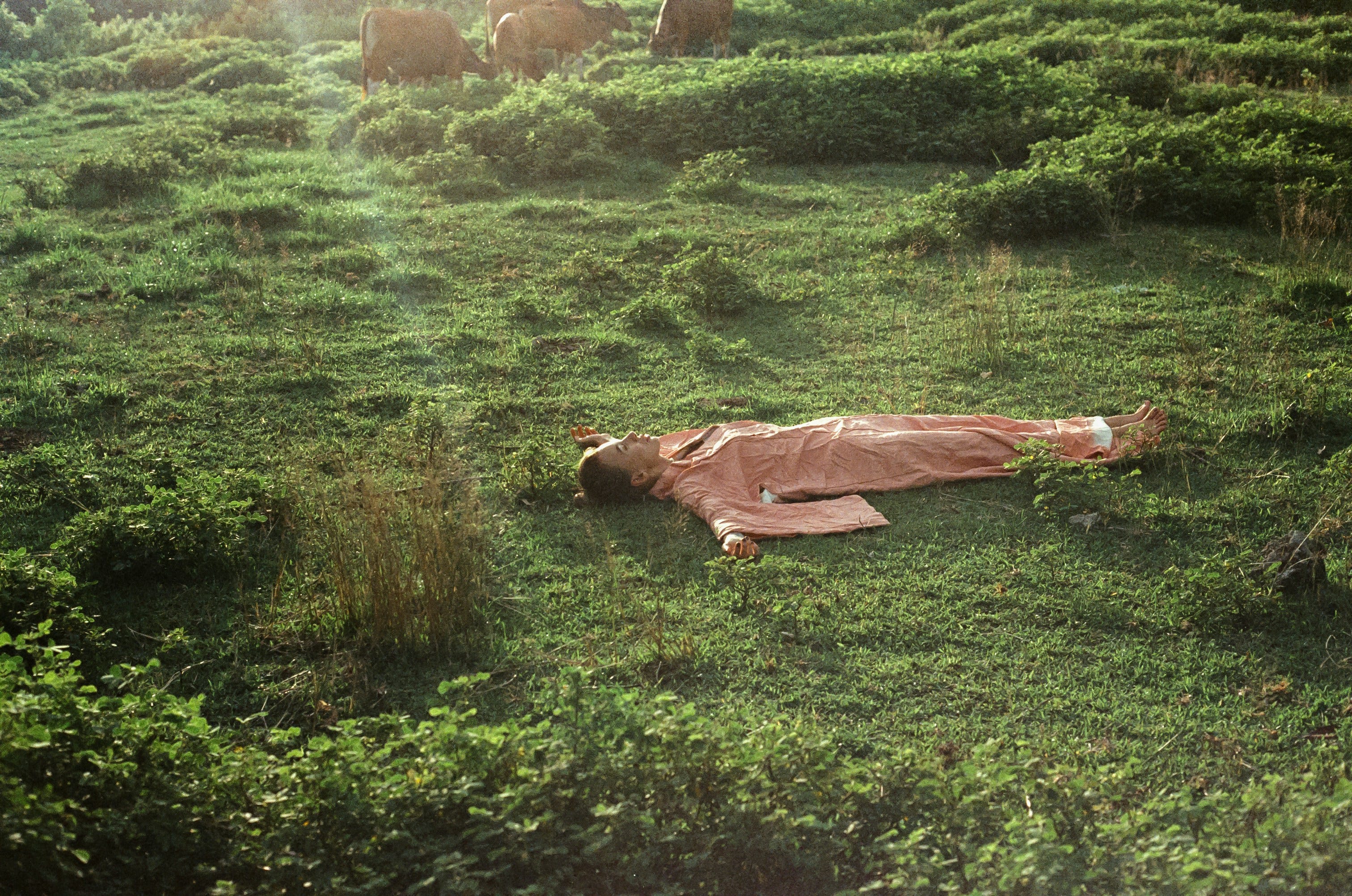
There's a practice in art education called slow looking. The exercise is almost confrontationally simple. You stand in front of a painting and look at it. That’s it. Not for a few seconds, not for the time it takes to read the label and decide whether you like it or not. For a long time. Thirty minutes. An hour! Sometimes even more. No phone. Zero context. Just the thing itself and your attention. It feels ridiculous for about the first 5 minutes. Diabolical at 10. Then something starts to shift. The obvious surface impression starts to fade, and the actual work starts to surface. A tension in the composition you didn’t notice. A detail in the lower corner that changes the whole reading. The sense that this was made by a person with a very specific intent that you’re only now beginning to pick up on.
You start noticing.
You start connecting.
Eddy Schleyner wrote about this in his book VeryGoodCopy in the context of copywriting, and I love that he did, because it shows how far the idea reaches. Slow looking isn't only reserved for museum activities. It's a way of paying attention that can be applied to almost anything – writing, design, architecture, and the business you've spent years building and perhaps haven’t paused to really look at in some time. The premise is simple, really. When you look long enough and openly enough at something, it starts to tell you things. Your business is no different.
Some of us can have a complicated relationship with stillness when it comes to work. Looking isn’t doing, and doing is how many of us have been taught to demonstrate our worth, to ourselves as much as anyone else. There’s also something a little vulnerable about really looking at the thing you’ve built…what if the picture is more complicated than the story you’ve been telling about it? Sometimes looking at your own business can feel like standing in front of Hieronymus Bosch’s Garden of Earthly Delights (but that might be exactly why it’s worth doing).
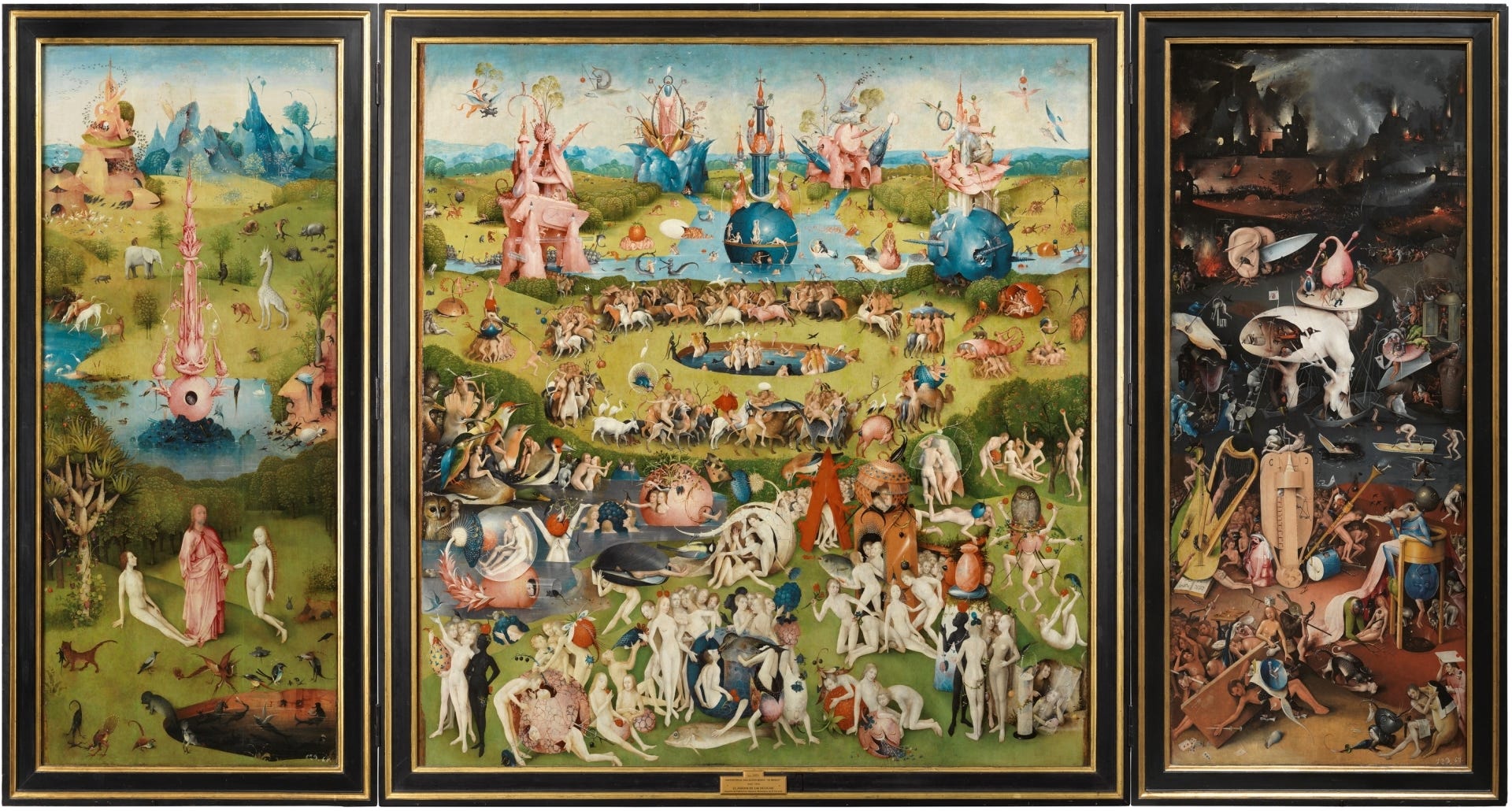
The Garden of Earthly Delights Triptych by Hieronymus Bosch via ©Museo Nacional del Prado
So it’s easy to stay busy instead. And the busyness has never been easier to justify, because we’ve never had more tools designed to help us understand and streamline our businesses. Analytics platforms, CRM dashboards, AI assistants that can synthesise a year of client data before you’ve finished your morning coffee. Don’t get me wrong, I’m a sucker for cool tools and an even cooler metrics dashboard. That stuff matters. In the consulting and coaching work I do with people and studios, we look at data all.the.time, and it is absolutely non-negotiable in informing decision-making.
But here is something that often gets lost in all that capability: there’s a difference between processing information and actually reflecting on it. The tools can tell you what happened — open rates, conversion ratios, which month your revenue dipped. What they can’t tell you is how any of it felt, what it means in the context of the work you actually want to be doing, or what the pattern across five years is suggesting about where you should go next. That part doesn’t live in a dashboard. It lives in the slower, “less efficient” act of a human being sitting with a question and giving it room. Which is why having someone ask you the right questions (a trusted peer, a friend, a coach, a consultant) can draw out things that no amount of solo data review ever will. And why making space to reflect on your own, regularly, matters just as much. All of these tools are useful, but they cannot do the intentional slow looking for you. That’s still yours. And it might be the most valuable thing you do all quarter.
So, what does slow looking at a business might actually look like? Start with what might be the most useful single exercise, a “gallery walk” of your own work. Take an hour — more if you can — and move through your business the way a curator moves through an exhibition before it opens. Not project by project, trying to remember the specific details of each one, but looking at everything together, as a body of work. Your projects, your proposals, your brand materials, the emails you’ve sent, and the conversations you’ve had.
If you were looking at someone else’s business, what would you see? What themes keep surfacing that you didn’t consciously design for? What’s the sensibility running through everything, and does it match the one you’d choose if you were starting today? Then go back further. Find something from three or four years ago. An early proposal, a first portfolio, a project you haven’t thought about since it ended. Look at what’s changed, but look harder at what hasn’t. The instincts and energy at the beginning of a creative practice might be pointing at something worth returning to. What you’ll often find is that what feels most true about your work right now was present from the start, just less visible under everything that accumulated on top of it.
Beyond the gallery walk, there are slower and stranger ways to do this that are worth trying precisely because they take you out of your normal analytical mode. Read one of your own proposals out loud, but not to edit it, just to hear it. You’ll immediately feel which parts actually sound like you and which parts are a performance of how you thought you were supposed to sound. Sketch your business on paper (your pipeline, your ideal client relationship, your year) and notice what you naturally put at the centre. Write a review of your business as if you were a client, not the ideal client, but the kind you actually work with most often. What would they say? What would they mention first?
If you’d rather start with questions than exercises, here are a few worth carrying around for a few days. Not to answer at a desk in one sitting, but to let them turn over while you’re making coffee, or wall gazing (yes, this IS a thing). Whatever lets the interesting answers surface:
If a stranger looked at my last twelve months of work, what kind of business would they think I was running?
What do I never mention in my marketing about what I do, even though it might be the most interesting part?
Which clients made me want to do my best work, and what did they have in common?
What would I be relieved to stop doing, if I let myself admit it?
What’s already working beautifully that I keep sprinting past?
…What would this business look like if fun were a genuine requirement, not an afterthought?
This one ↑ isn’t a rhetorical question.
Joy is actual information. It’s data of a different kind, the kind we tend to ignore because it doesn’t fit neatly into a spreadsheet. If a significant part of your business has had the curiosity and fun optimised out of it, that’s worth knowing. Not to feel bad about it, but because it usually points toward something that could be good to look at.
The thing about slow looking is that it tends to produce a specific and slightly counterintuitive result. You sit down expecting to find problems, or gaps, or a roadmap for what needs to change. What you usually find instead is a thread. The thing that runs through your best work. The pattern in your best client relationships. The version of the business that’s been trying to emerge underneath all the busyness. And then moving forward feels different. Less like starting over, more like following something that was already in motion. That’s a different kind of momentum than the kind we usually chase. It’s slower to arrive at and considerably harder to lose. It also tends to be more fun, which is not a trivial thing (in this world and economy).
So before the next strategy session, the next rebrand conversation, the next plan to level things up, consider slow looking first. The business you’ve built is already full of information. It’s been trying to tell you things for a while. You just have to slow down long enough to hear it.
If this resonated, pass it on to someone who’s been running fast lately. Sometimes the most useful thing we can offer a friend is permission to pause.
